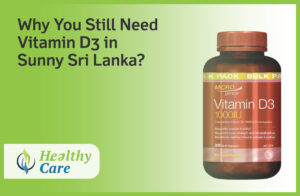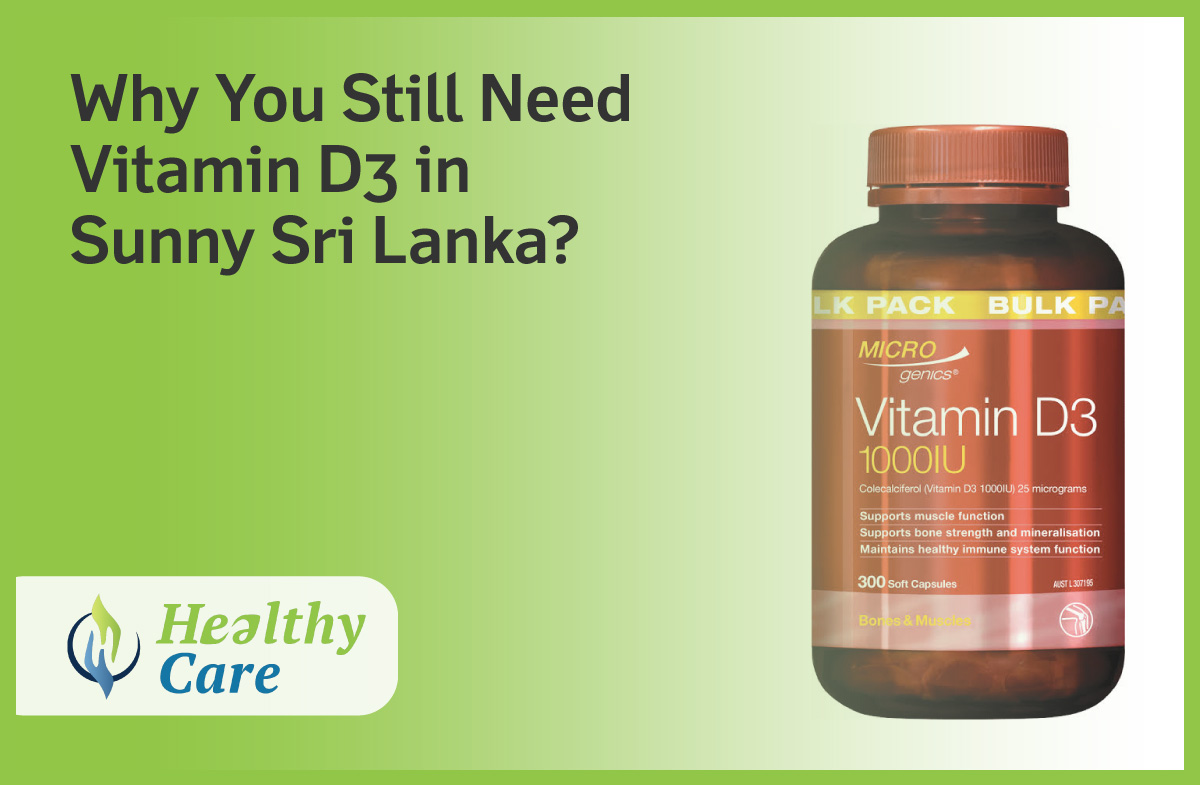
Sri Lanka is known for its warm weather and plenty of sunshine throughout the year. With so much sunlight available, we may assume that getting enough Vitamin D is never a problem. However, spending time in a sunny country does not automatically mean that we maintain healthy Vitamin D levels.
Our daily routines, indoor working environments, clothing choices, sunscreen use, and limited outdoor activities can all affect how much Vitamin D our bodies produce. Even when the sun shines regularly, we may not get enough exposure to maintain adequate levels.
Vitamin D3 plays an important role in supporting our bones, muscles, and immune system. At Healthy Care, we believe that understanding our nutritional needs helps us make better health decisions. Let’s explore why Vitamin D3 still matters in Sri Lanka and how we can maintain healthy levels.
1. Sunshine Does Not Always Mean Enough Vitamin D3
Sunlight helps our bodies produce Vitamin D naturally. When UVB rays reach our skin, they trigger a process that allows our bodies to make Vitamin D3.
However, several everyday habits can reduce our exposure to the sunlight needed for this process.
For example:
- We spend most of our working hours indoors.
- We travel in vehicles instead of walking outdoors.
- We spend less time outside during peak sunlight hours.
- We wear clothing that covers most of our skin.
- We regularly use sunscreen to protect our skin from UV damage.
These habits can reduce the amount of Vitamin D our bodies produce.
Therefore, living in a tropical country like Sri Lanka does not guarantee that we receive enough Vitamin D3. We should consider our lifestyle and nutritional needs rather than relying only on the weather.
2. Why Is Vitamin D3 Important for Our Health?
Vitamin D3, also known as cholecalciferol, is an essential nutrient that supports several important functions in our bodies.
One of its main roles is helping our bodies absorb calcium, which is necessary for maintaining healthy bones and teeth.
Here are some important functions of Vitamin D3:
- Supports bone health: Vitamin D helps our bodies absorb calcium and phosphorus, which contribute to maintaining strong bones.
- Supports muscle function: Adequate Vitamin D levels help maintain normal muscle function.
- Supports immune function: Vitamin D plays a role in the normal functioning of our immune system.
- Helps maintain calcium levels: Our bodies need Vitamin D to maintain healthy calcium levels in the blood.
- Supports overall wellness: Maintaining adequate Vitamin D levels contributes to several important body functions.
When we do not get enough Vitamin D over time, we may develop a deficiency that can affect our bones and muscles.
3. Why Do People in Sri Lanka Still Experience Vitamin D Deficiency?
Even though Sri Lanka receives plenty of sunshine, Vitamin D deficiency can still affect people across different age groups.
Our modern lifestyles are one of the main reasons.
Many of us work in offices, study indoors, spend long hours using computers, or travel during the day without spending much time outside.
Other factors can also affect Vitamin D levels:
- Limited outdoor activities: Spending most of our time indoors reduces our opportunities for natural sunlight exposure.
- Skin pigmentation: People with darker skin generally need more UVB exposure to produce the same amount of Vitamin D as people with lighter skin.
- Age: Our skin becomes less efficient at producing Vitamin D as we get older.
- Dietary habits: Only a limited number of foods naturally contain significant amounts of Vitamin D.
- Health conditions: Certain digestive and medical conditions can affect how our bodies absorb or process Vitamin D.
This explains why we should not assume that living in a sunny country automatically protects us from Vitamin D deficiency.
4. Can We Get Enough Vitamin D from Food?
Sunlight is an important source of Vitamin D, but we can also obtain this nutrient through our diet.
Some foods naturally contain Vitamin D, while manufacturers add it to certain fortified foods.
We can include the following foods in our diet:
- Fatty fish such as salmon, sardines, and tuna.
- Egg yolks.
- Vitamin D-fortified milk.
- Fortified breakfast cereals.
- Certain mushrooms exposed to UV light.
However, our regular meals may not always provide enough Vitamin D to meet our nutritional requirements.
This is why some people may benefit from Vitamin D3 supplements, particularly when they have limited sun exposure or difficulty getting enough Vitamin D through food.
5. When Should We Consider Vitamin D3 Supplements?
We should not automatically start taking supplements simply because we live in Sri Lanka. Instead, we should consider our lifestyle, diet, and individual nutritional requirements.
Vitamin D3 supplements may be useful for people who:
- Spend most of their day indoors.
- Have limited exposure to sunlight.
- Rarely consume Vitamin D-rich foods.
- Have been diagnosed with low Vitamin D levels.
- Have certain medical conditions that affect Vitamin D absorption.
- Have been advised by a healthcare professional to take additional Vitamin D.
A blood test measuring 25-hydroxyvitamin D can help determine our Vitamin D status.
If we suspect a deficiency, we should speak with a healthcare professional before choosing a supplement or deciding on a dosage.
6. Choosing the Right Vitamin D Supplement in Sri Lanka
When searching for a Vitamin D supplement Sri Lanka shoppers can rely on, we should consider more than just the product price.
Different supplements offer different strengths, quantities, and formulations. Understanding these differences helps us choose a product that matches our nutritional requirements.
Before buying, we should check:
- Vitamin D3 strength: Check how much Vitamin D3 each capsule or tablet contains.
- Product quantity: Compare the number of capsules or tablets in each bottle.
- Ingredients: Review the full ingredient list and formulation.
- Brand reputation: Choose products from recognised manufacturers.
- Product authenticity: Purchase from trusted retailers that provide genuine products.
- Expiry date: Check the expiry date before completing our purchase.
By comparing these details, we can make a more informed decision without spending unnecessarily.
7. Vitamin D Capsule or Vitamin D Tablets: Which Should We Choose?
When shopping for supplements, we may find Vitamin D available in different forms, including capsules, tablets, and liquid preparations.
Both capsules and tablets can provide Vitamin D3. The best option depends on our preferences, the product formulation, and how comfortably we can take it.
A Vitamin D capsule may be convenient for people who prefer softgel supplements. Some products use an oil-based formulation because Vitamin D is a fat-soluble vitamin.
Vitamin D tablets offer another convenient option and are easy to store and include in our daily supplement routine.
When choosing between these options, we should focus on the Vitamin D3 content, serving instructions, quality, and suitability rather than assuming one format is always better.
8. Discover Microgenics Vitamin D3 1000IU from Healthy Care
If we are looking for a convenient Vitamin D3 supplement, we can explore Microgenics Vitamin D3 1000IU 200 Caps.
This product provides 1,000 IU of Vitamin D3 per capsule and comes in a bottle containing 200 capsules.
Here are some details worth considering:
- 1,000 IU strength: Provides a clearly stated amount of Vitamin D3 per capsule.
- 200-capsule bottle: Offers a convenient supply for regular use according to the product instructions.
- Convenient capsule format: Easy to include in a daily supplement routine.
- Recognised supplement range: Microgenics offers nutritional supplements for different needs.
We should always follow the product instructions and seek professional advice if we are unsure whether the 1,000 IU strength is suitable for us.
9. Understanding Vitamin D Tablets Price in Sri Lanka
The Vitamin D tablets price in Sri Lanka can vary depending on the brand, dosage, formulation, and number of tablets or capsules in each bottle.
Some products may have a lower initial price but contain fewer servings. Others may cost more but provide a larger quantity.
When comparing products, we should consider:
- The amount of Vitamin D3 per capsule or tablet.
- The total number of capsules or tablets.
- The cost per serving.
- The manufacturer’s reputation.
- Product quality and authenticity.
We should also compare the Vitamin D3 price in Sri Lanka across reliable retailers rather than choosing the cheapest available option without checking its details.
Similarly, the Vitamin D price in Sri Lanka may differ depending on whether we choose Vitamin D2 or D3, the formulation, and the product strength.
A little research before purchasing can help us find a product that offers good value without compromising on quality.
10. How Much Vitamin D3 Do We Need Daily?
Our daily Vitamin D requirements depend on factors such as age, health status, and individual nutritional needs.
For most adults aged 19–70, the recommended daily intake is 600 IU (15 mcg). Adults over 70 generally need 800 IU (20 mcg) daily.
However, these are general nutritional recommendations, not treatment doses for people with a diagnosed deficiency.
We should also remember that taking more Vitamin D does not automatically provide better health benefits. Excessive Vitamin D intake can increase calcium levels in our blood and cause health problems.
For most adults, the general tolerable upper intake level is 4,000 IU daily unless a healthcare professional recommends a different dose for medical reasons.
Before taking high-strength supplements regularly, we should consider professional advice and our individual requirements.
11. Simple Ways to Maintain Healthy Vitamin D Levels in Sri Lanka
We can support our Vitamin D levels through a combination of healthy lifestyle habits and suitable nutrition.
Here are some practical steps:
- Spend time outdoors: Include safe outdoor activities in our daily routine.
- Eat Vitamin D-rich foods: Add fatty fish, eggs, and fortified foods to our meals.
- Maintain a balanced diet: Include a variety of nutrients that support our overall health.
- Check our Vitamin D levels when necessary: Speak with a healthcare professional about testing if we have risk factors or symptoms.
- Choose supplements carefully: Use Vitamin D3 supplements when they match our nutritional needs and professional advice.
- Follow safe sun practices: Avoid excessive UV exposure and continue protecting our skin from sun damage.
These simple habits can help us maintain a healthier lifestyle while supporting our nutritional needs.
Stay Healthy with the Right Vitamin D3 Choice
Living in sunny Sri Lanka does not always mean that we get enough Vitamin D. Our indoor routines, dietary habits, skin type, and other individual factors can influence how much Vitamin D our bodies receive and produce. By understanding these factors, we can make better decisions about our nutrition and consider Vitamin D3 supplements when necessary.
At Healthy Care, we make it easier to explore nutritional supplements from recognised brands. As an Authorized Healthy Care fish oil supplier in Sri Lanka, we also provide access to genuine Healthy Care products. If we are looking for a convenient Vitamin D3 option, we can explore Microgenics Vitamin D3 and other available supplements. Visit our online store today and Shop our range of nutritional products.